
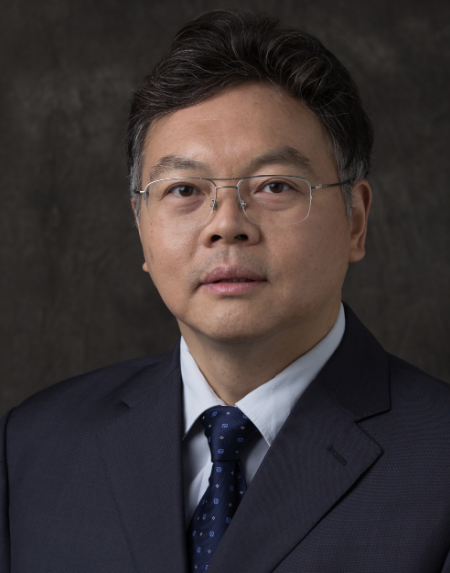
Prof. Kama Huang, Sichuan University, China (Foreign academician of the Russian Academy of Engineering)
黄卡玛 教授,四川大学(俄罗斯工程院外籍院士、国家级高层次人才)
Experience: Kama Huang is a professor and doctoral supervisor. In 1991, he obtained a doctoral degree in Electromagnetic Field and Microwave from University of Electronic Science and Technology of China. I have been engaged in fundamental and innovative application research on high-power microwaves, mainly including the basic research on microwave wireless energy transmission and the industrial application of microwave energy. He is Academic Dean of the School of Electronic Information, Sichuan University, and Director of the Key Laboratory of Wireless Energy Transmission of the Ministry of Education. He is Foreign academician of the Russian Academy of Engineering, recipient of the National Science Fund for Distinguished Young Scholars, selected as a specially-appointed professor under the National Talent Program, chief scientist of the 973 Project of the National Major Basic Research Program, expert enjoying the special government Allowance of The State Council, one of the first batch of national-level candidates of the New Century Hundred, Thousand and Ten Thousand Talents Project, and a Distinguished Scientist of Tianfu.
Title: Macrokinetic models of microwave chemistry
Abstract: To understand the interaction between high-power microwaves and chemical reaction systems, including the propagation of microwaves, the distribution of temperature fields, and the variation laws of reaction systems, it involves the macroscopic kinetics research of microwave chemistry. This report elaborates on how to construct a macroscopic kinetics theoretical model of microwave chemistry by using multiple physical and reaction equations, as well as how to establish the coupling relationships among these equations. Finally, the evolution of microwave chemical processes is demonstrated through numerical simulation.
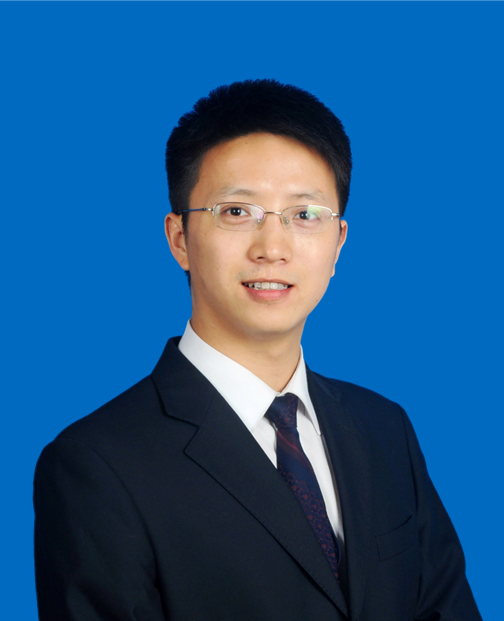
Prof. Ming-Chun Tang, Chongqing University, China (IEEE Fellow)
唐明春 教授,重庆大学(IEEE Fellow、国家级高层次人才)
Experience: Ming-Chun Tang is a Professor and Ph.D. Supervisor at Chongqing University, recipient of the National Science Fund for Distinguished Young Scholars, and an IEEE Fellow. Professor Tang has long been engaged in research on broadband electrically small antennas, high-efficiency miniaturized antennas, high-density arrays, and phased array technologies. He has led more than 50 research projects funded by national, provincial, and ministerial-level programs, as well as major corporations and research institutes. Professor Tang has published more than 280 academic papers and filed over 50 applications for national invention patents. He has served as Lead Guest Editor, Guest Editor, Editorial Board Member, and Associate Editor for several international SCI-indexed journals. He has also served more than 30 times as General Chair, Technical Program Committee Chair, Session Chair, or Technical Program Committee Member for international and national conferences.
Title: Broadband and Wide-Beam Miniaturized Antennas and Their High-Density Array Theory and Methodology
Abstract: Compact antennas featuring broadband operation, wide-beam coverage, and high radiation efficiency have attracted considerable attention in recent years owing to their electrically small size, broad bandwidth, high efficiency, and wide-beam directional radiation characteristics. This report will gradually report the research progress of the recent research group on the theory and practice of broadband, wide-beam miniaturized antennas and their high-density arrays from basic theory, design criteria, and engineering practice. It will systematically introduce the key theories of the electrically small antenna from single-element radiation to multi-element integrated collaborative near-field resonant parasitic technology to achieve wide beam and wide bandwidth, and further expand to the mechanisms, design methods and engineering practices of mutual coupling suppression, pattern retention and wide-angle coverage in high-density arrays.
Prof. Zheng Chang, University Of Electronic Science and Technology of China, China
常征 教授,电子科技大学
Experience: Zheng Chang is now a professor and Ph.D. Supervisor at University of Electronic Science and Technology of China. He has published over 230 papers in journals and conferences, and received best paper awards from IEEE ICC in 2023, IEEE TCGCC and APCC in 2017. He has been awarded as 2018 IEEE Communications Society best young researcher for Europe, Middle East and Africa Region and 2021 IEEE Communications Society MMTC Outstanding Young Researcher. He serves as an editor of IEEE Wireless Communications Letters, IEEE Transactions on Machine Learning in Communications and Networking and China Communications, and a guest editor for IEEE Network, IEEE Wireless Communications, IEEE Communications Magazine, IEEE Internet of Things Journal, IEEE Transactions on Industrial Informatics, etc. He was the Best editor of IEEE Wireless Communication Letters and China Communications in 2024, the exemplary reviewer of IEEE Wireless Communication Letters in 2018. He has participated in organizing workshop and special session in Globecom’ 19, WCNC’18-‘24, SPAWC’19 and ISWCS’18. He also serves as Symposium/Track co-chair of IEEE ICC’20, Globecom’23, VTS’25S, VTS’26S, and ICC’26, Publicity co-chair of IEEE Infocom’22, Workshop co-chair of ICCC’22 and VTS’25F, TPC co-chair of IEEE iThing’22, and TPC member for many IEEE major conferences, such as INFOCOM, ICC, and Globecom. His research interests include federated learning, cloud/edge computing, UAV/vehicular networks, and green communications.
Title: Distributed Edge Intelligence in Wireless Networks
Abstract: Distributed edge intelligence (DEI) is a critical enabler of the manufacturing industry’s digital transformation and the intelligent advancement of the economy and society. It deeply empowers domains including intelligent transportation, industrial smart manufacturing, and embodied intelligence, while serving as the core foundation for achieving secure data circulation and efficient computing power collaboration. Currently, DEI faces four core challenges: the conflict between heterogeneous data distribution across edge devices and global model convergence; the mismatch between the hardware capabilities of resource-constrained terminals and the computational overhead of model training; the tension between frequent high-dimensional feature interaction and real-time performance under limited bandwidth; and the trade-off between token selective transmission and task performance. To address these challenges, this presentation adopts a paradigm that takes data as the foundation, computing as the core, and communication as the bridge, conducting research that extends from federated learning to split federated learning. We further construct a multi-dimensional collaborative DEI framework integrating data, computing, communication, and task dimensions, and design targeted technical solutions spanning data augmentation, adaptive model splitting, communication transmission optimization, and semantic-aware transmission. Finally, we outline future research directions and propose a development vision for the bidirectional integration of large language models (LLMs) and 6G networks.
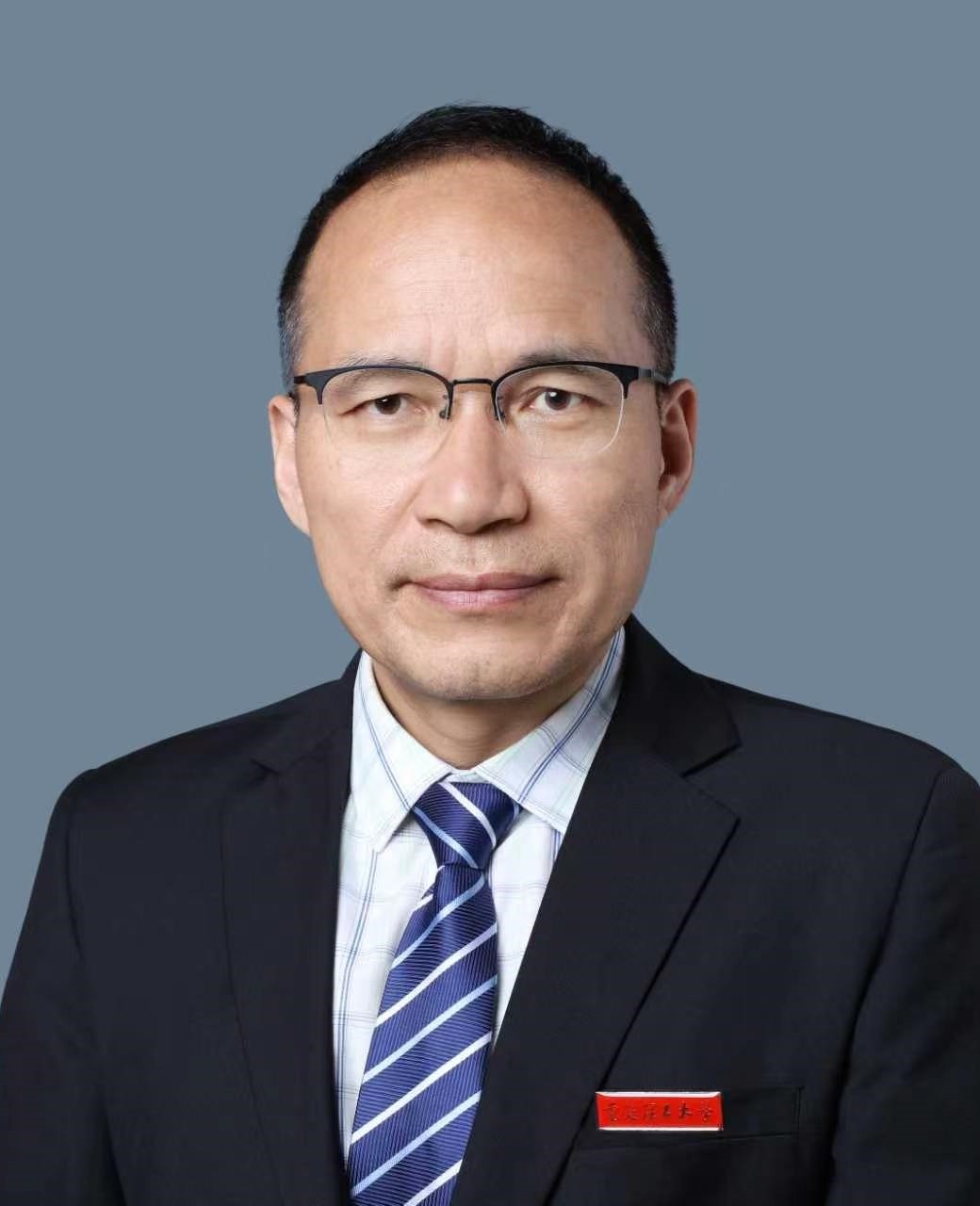
Prof. Zongju Peng, Chongqing University of Technology, China
彭宗举 教授,重庆理工大学
Experience: Peng Zongju is a professor and doctoral supervisor at Chongqing University of Technology. He has been selected as an Academic and Technical Leader of Chongqing Municipality and a recipient of the Elite Program of Banan District, Chongqing. He has long been engaged in research in the field of image and video signal processing. To date, he has presided over six national or provincial/ministerial-level projects, including projects funded by the General Program of the National Natural Science Foundation of China. As the first author or corresponding author, he has published over 100 papers in journals such as IEEE Transactions on Image Processing, IEEE Transactions on Broadcasting, and Journal on Communications. He has filed and been granted more than 20 invention patents. He serves as a member of the Video Communication Technical Committee of CSIG (China Society of Image and Graphics) and a member of the 3D Imaging and Display Technical Committee of CSIG.
Title: Light Field Super-Resolution Reconstruction: From Asymmetric Decoupling to Large-Kernel Attention Mechanisms
Abstract: Light field imaging, as an emerging imaging technology, is capable of simultaneously recording both the intensity and directional information of light rays, which endows light fields with a wide range of applications in visual tasks such as depth estimation, object detection, and 3D reconstruction. However, constrained by the total number of physical pixels in image sensors, light field imaging suffers from an inherent trade-off between spatial and angular resolution, resulting in captured images that often face issues such as low spatial resolution and loss of fine details. This report will address the challenges of disparity misalignment and artifacts caused by complex geometric structures and occluded regions in light-field image reconstruction. We will present a series of research efforts from our group in recent years on light field image super-resolution, leveraging deep learning techniques such as large-kernel convolutional attention and Vision Transformers.